
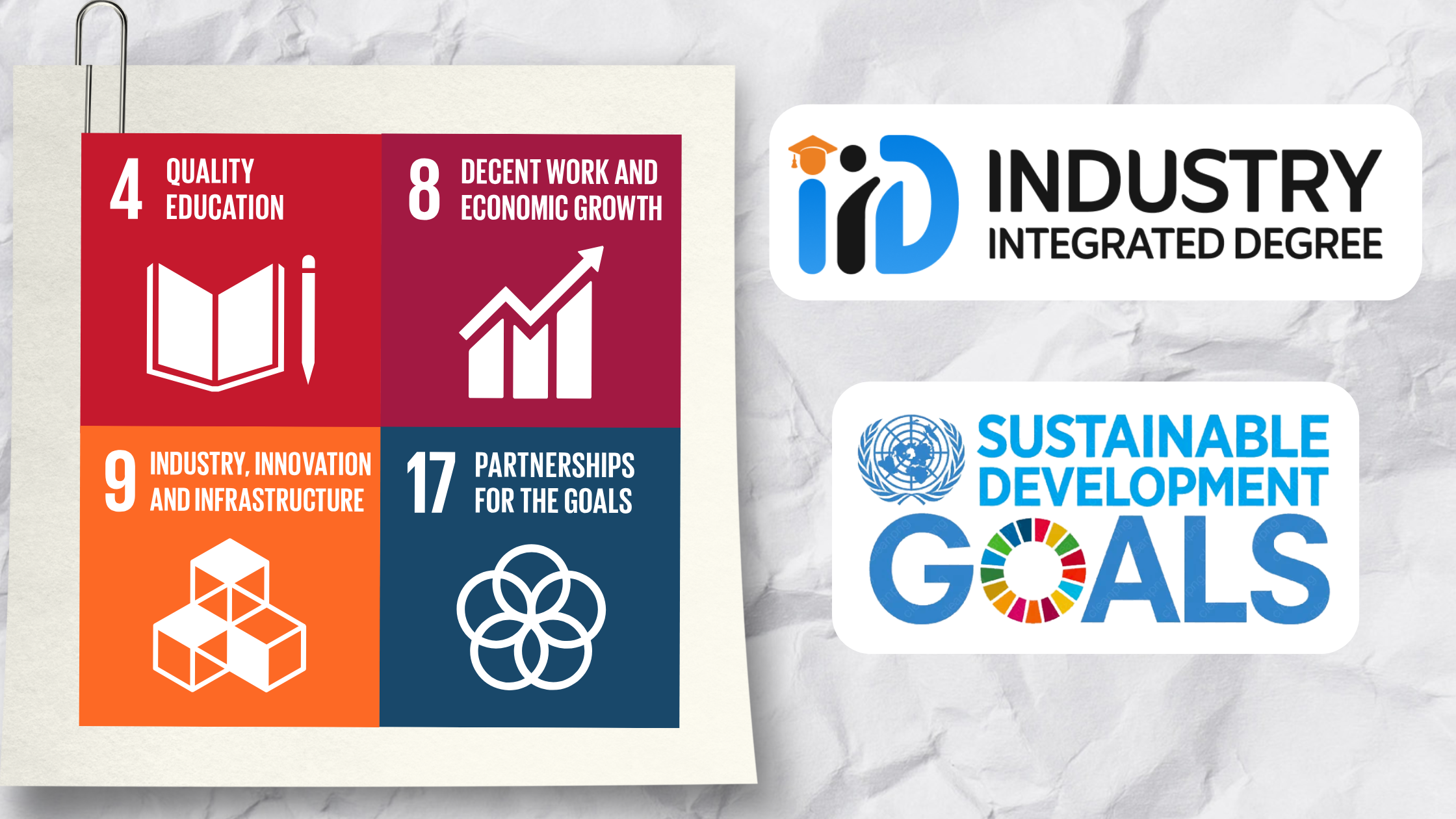
Nepal's Industry-Integrated Degree (IID) aligns with four UN Sustainable Development Goals to bridge higher education and the IT industry skill gap.
The Industry-Integrated Degree (IID) is designed to address a key challenge in Nepal's higher education system: the gap between what students learn at university and the skills employers need in the workplace.
By combining academic education with industry experience, IID aims to prepare students for employment while strengthening collaboration between universities, employers, development partners, and the technology sector.
The programme aligns with four United Nations Sustainable Development Goals (SDGs): Quality Education (SDG 4), Decent Work and Economic Growth (SDG 8), Industry, Innovation and Infrastructure (SDG 9), and Partnerships for the Goals (SDG 17).
SDG 4: Quality Education

SDG 4 focuses on inclusive and equitable quality education and increasing access to relevant skills for employment.
IID supports this goal by connecting academic learning with practical workplace experience. Students will pursue their degree through Nepal Open University while gaining industry exposure as part of their education.
The curriculum is being developed with participation from university faculty and IT industry professionals to ensure that students learn skills relevant to current and emerging workforce needs.
The approach moves beyond degree completion by placing greater emphasis on knowledge, practical skills, and employability.
SDG 8: Decent Work and Economic Growth
SDG 8 promotes productive employment, decent work, and sustainable economic growth.
One of the challenges facing IT graduates in Nepal is the transition from university to professional employment. Many graduates require additional training before they are ready to contribute effectively in the workplace.
IID seeks to address this gap through work-integrated learning. Students gain professional exposure during their studies instead of waiting until graduation to enter the workplace.
By combining academic qualifications with practical experience, the programme aims to help graduates make a smoother transition into employment and contribute to Nepal's growing digital economy.
SDG 9: Industry, Innovation and Infrastructure
SDG 9 focuses on sustainable industrial development, innovation, and infrastructure.
Nepal's growing digital economy requires professionals with skills in emerging areas of technology. IID has identified five major technology areas for its programme:
Application Development
Artificial Intelligence
Cloud Engineering
Data Engineering
Cybersecurity
Find out more about this, right here.
These areas were identified through consultations with industry professionals and academic experts and reflect the changing needs of Nepal's IT sector and the global technology market.
By developing talent in these fields, IID aims to strengthen Nepal's domestic technology workforce and support the growth of its IT and digital services industry.
SDG 17: Partnerships for the Goals
SDG 17 highlights the importance of effective partnerships among institutions, businesses, governments, development organizations, and other stakeholders.
Partnership is central to the IID model.
The programme brings together the Nepal Association for Software and IT Services Companies (NAS-IT), Nepal Open University (NOU), Swisscontact, and other academic, government and industry stakeholders.
IT industry leaders, including CEOs, CTOs, technology professionals, engineers, and university professors, have contributed to the development of the curriculum.
This creates a model in which industry is not only a future employer of graduates but also an active participant in shaping what students learn.
Connecting Education with Opportunity
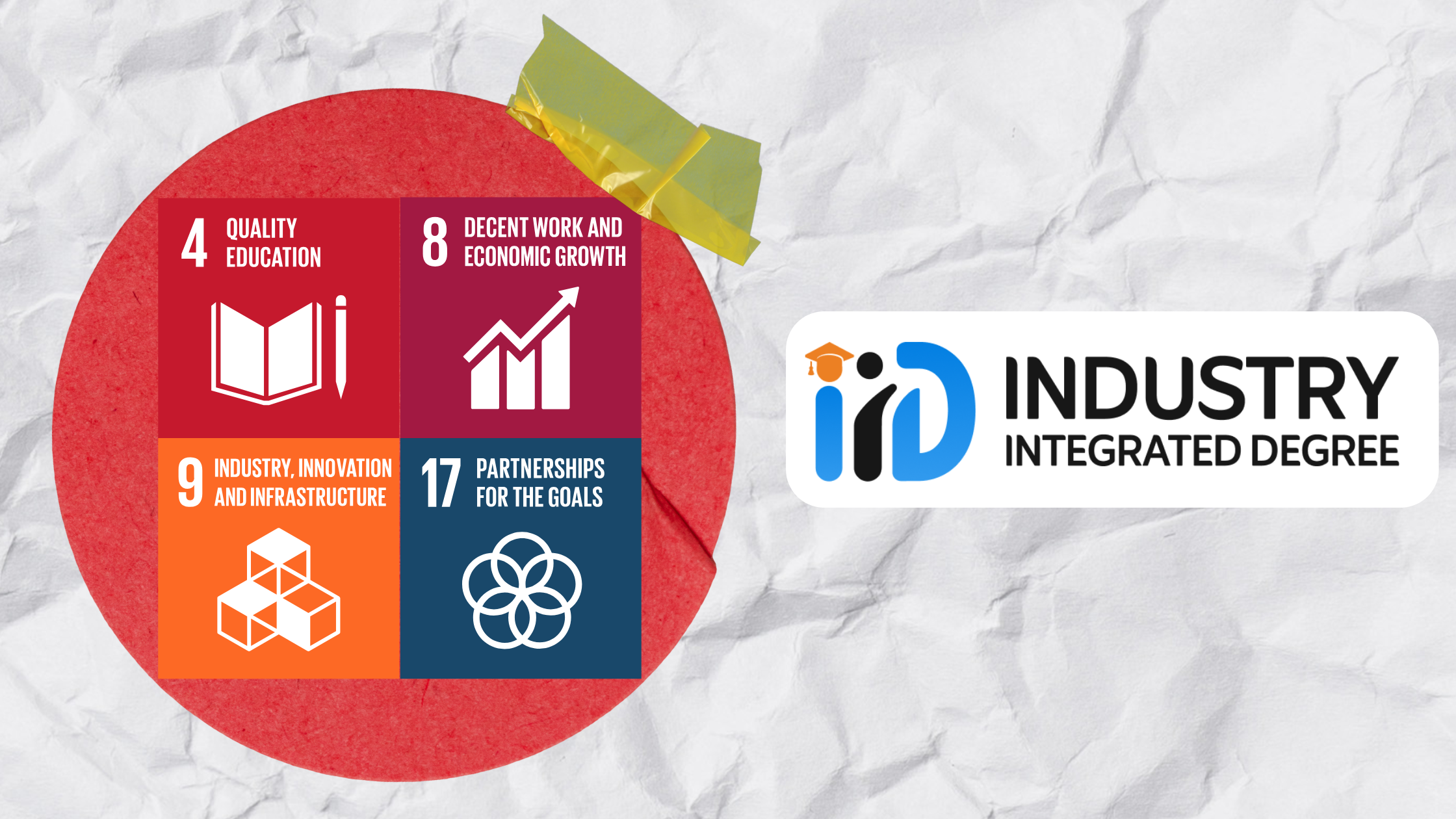
The four SDGs reflect the broader purpose of IID: connecting education with employment, industry needs with academic learning, and institutions with opportunities for collaboration.
By integrating university education with practical industry experience, IID aims to help students develop the knowledge and skills required to build careers in Nepal's growing technology sector.
The programme also provides an example of how collaboration between academia, industry, government stakeholders, and development partners can contribute to workforce development and support Nepal's digital economy.
IID is an initiative of the Nepal Association for Software and IT Services Companies (NAS-IT) in collaboration with Nepal Open University (NOU), with support from the Swiss Agency for Development and Cooperation (SDC) through the technical assistance of Swisscontact.